
Carnival
Bright bands of colour, painted freehand. The range Reckless Designs is best known for — mugs, jugs, teapots and tea caddies.

Coleford, Forest of Dean
The kiln room still holds yesterday’s heat, there is clay under a thumbnail, and the shop is quiet — the way it is every morning before the door opens.
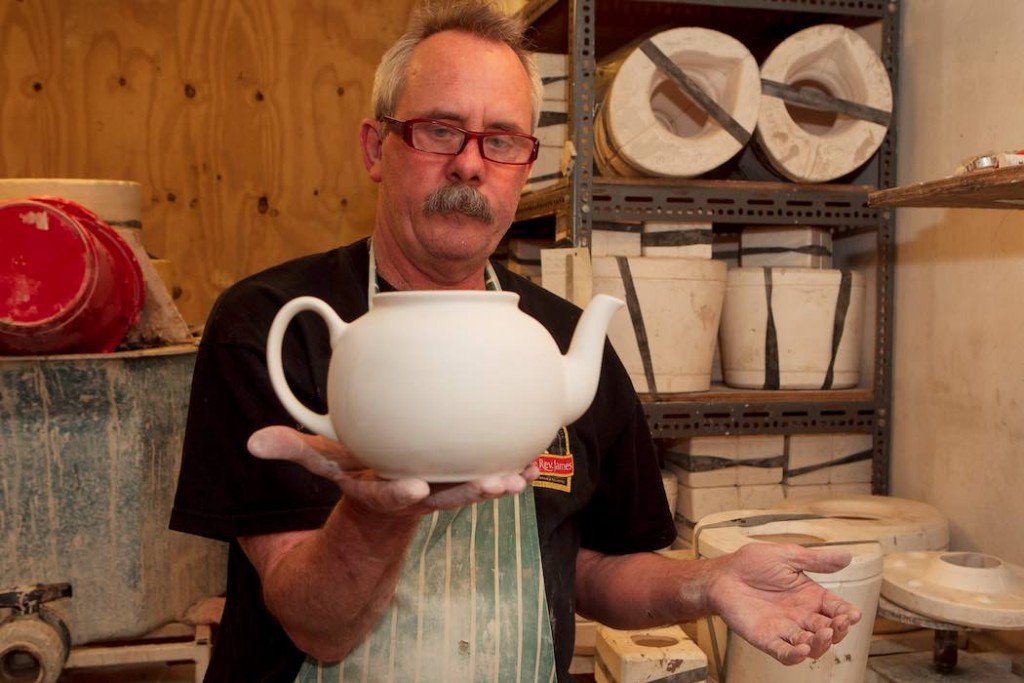
The maker
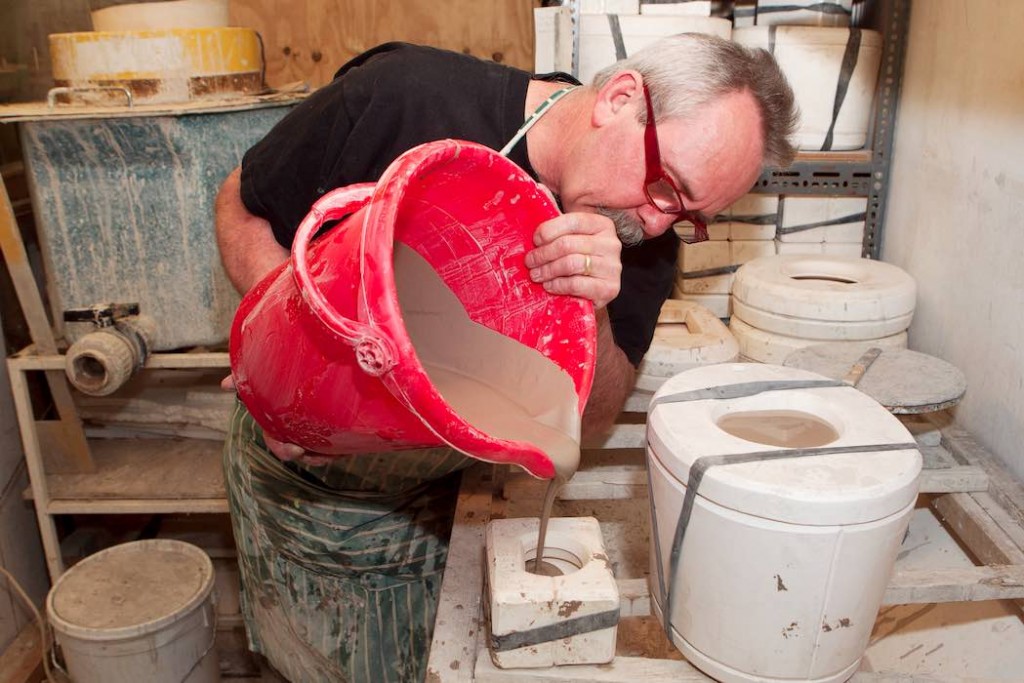
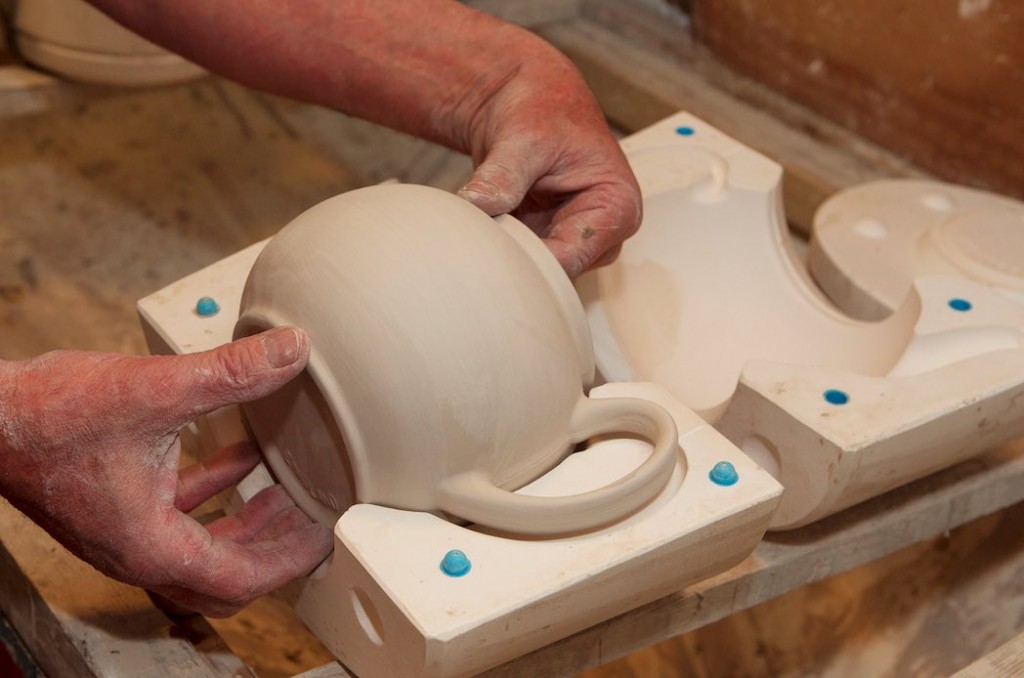
Reckless Designs was established in 1991 — “makers of smart ceramics for people who demand superior pots at sensible prices.” Every shape began here, thrown or sculpted by hand and then turned into a plaster mould. From those moulds an experienced potter can slip-cast a hundred pieces and more in a day, and every one is then painted by hand in underglaze colour, oxide and onglaze lustre.
Thirty years on, that means a set of established ranges, a mould library that would take years to build from scratch, and a maker who still knows every step.
The work
Hand-painted in underglaze colour, oxide and onglaze lustre. Bright, freehand, made to be used every day.
Bright bands of colour, painted freehand. The range Reckless Designs is best known for — mugs, jugs, teapots and tea caddies.
Hand-painted roses on a plain ground. The fullest range in the catalogue: plates, bowls, jugs, teapots, cups and saucers, and vases.
Brush and glaze only, no colour. Plates, bowls and serving pieces.
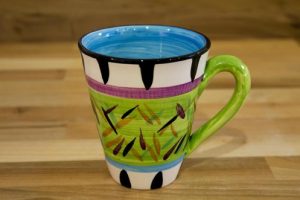
Poured and flicked colour, so every piece comes out different. Made in yellow, orange, lime and pale blue.
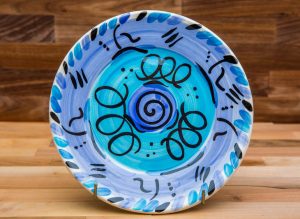
One strong colour per piece, in blocks and bands — blue, green, purple, red or yellow. Dinner plates, side plates and butter dishes.
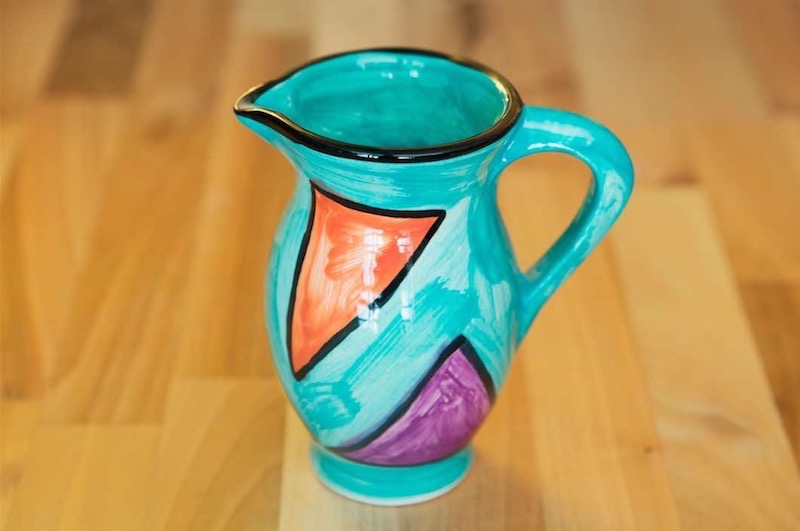
Made to a brief: bespoke sets, larger vessels, and pieces for weddings, restaurants and collectors.
The proof
Orders come in direct from customers across the country, every week, and have done for years.
More than thirty years of trade: an online shop with steady order flow, a network of galleries and craft shops, and wholesale accounts that reorder. Some accounts are happy to be named; others prefer to stay private.
The place
The property runs from the street back and up: the shop, the working pottery behind it, a self-contained bed-sit, and the house above. All in use, all in the sale.
The face on the street — where customers walk in, where retail sales happen, and where the pottery meets the town. Trading as it stands.
Directly behind the shop — the working pottery. Wheels, wedging bench, glaze area, the mould library and kilns, laid out for one maker and ready to run from day one.
A self-contained room between the workshop and the house — useful now for a maker who stays late, or as a let, a studio, or space for an assistant.
The home above it all — where the current owner lives. A full house on top of a working business, so the commute is a flight of stairs.
What you would inherit
You would not be starting a pottery. You would be taking over one that has run since 1991 — with customers who already order, moulds and ranges already developed, and a shop and website already trading.
The figures, order volumes and full detail are shared privately with serious enquirers.
Your first months
The maker is not walking away on completion day. They will train the new owner in person — casting, painting, firing, and the customer side of the business — and stay on until the new owner has what they need.
It is what makes this workable for someone who is not yet a potter.
The invitation
No hard sell. Tell us a little about yourself and why this interests you, and we will arrange a conversation or a viewing from there.
Guide price on application.
Arrange a private conversationNo obligation. Every enquiry is read personally, in confidence.